

Navigating Jamaica’s legal system can be challenging, particularly for those who cannot afford the high costs associated with hiring an attorney. With legal fees often proving a barrier to justice, many individuals seek alternative solutions for handling legal matters. This is where paralegals play a vital role, offering affordable and accessible legal support for everyday Jamaicans.
- What is a Paralegal and How Do They Differ from Attorneys?
- Education and Training Requirements for Paralegals
- Concerns About Non-Lawyers Performing Legal Work
- Ensuring Affordable Legal Help: Supervised Paralegal Services
- How TruGuide Ensures Compliance & Affordability
What is a Paralegal and How Do They Differ from Attorneys?
A paralegal is a trained legal professional who assists with various legal tasks under the supervision of a lawyer. While they do not have the authority to represent clients in court or provide legal advice in the same capacity as an attorney, they play an essential part in supporting legal processes, such as document preparation, legal research, and administrative tasks.
Education and Training Requirements for Paralegals
Paralegals enter the profession through two main pathways:
- Specialised Paralegal Training Programmes – Institutions offer courses focused on legal principles, document drafting, case management, and other important skills for legal support roles. Some of these institutions include the Excelsior Community College, the Institute of Law & Economics, the University College of the Caribbean, the Paralegal Training Institute and the University of the West Indies.
- Undergraduate Law Degree (LLB) Holders – Individuals who have completed an LLB but have not been called to the Bar may work as paralegals, leveraging their legal education to support attorneys and clients in non-litigious matters.
Concerns About Non-Lawyers Performing Legal Work
The Jamaican Bar Association has expressed concerns about non-lawyers performing legal work traditionally reserved for attorneys. This concern stems from the risk of individuals receiving inaccurate or incomplete legal assistance from unqualified persons.
Other jurisdictions have sought to regulate this issue in different ways:
Canada
The Law Society of Ontario (LSO) licenses and regulates paralegals. The LSO distinguishes between the ‘practice of law’ (reserved for lawyers) and ‘provision of legal services’ (permitted for licensed paralegals).
Paralegals can represent clients in Small Claims Court and before administrative tribunals but cannot handle real estate transactions or family law cases requiring court appearances.
United Kingdom
Paralegals are not legally regulated but may obtain voluntary certification through organisations like the National Association of Licensed Paralegals (NALP).
Paralegals can conduct legal research and draft documents under solicitor supervision, represent clients in Small Claims Court if registered with NALP, and offer limited advice in police custody matters. However, they cannot engage in reserved activities such as litigation in higher courts or probate work.

Kenya
Kenya’s Legal Aid Act (2016) formally recognises community paralegals as justice actors. They provide legal education and mediation but must refer complex cases to licensed lawyers.
South Africa
South Africa’s Legal Practice Act (2014), amended in 2023, grants statutory recognition to paralegals for them to work primarily in Community Advice Offices, offering services in townships and informal settlements.
Ensuring Affordable Legal Help: Supervised Paralegal Services
While legal fees can be prohibitively high, paralegals offer a cost-effective alternative for Jamaicans who need assistance with legal documentation and processes. However, to maintain legal integrity, paralegals must work under the supervision of a licensed attorney. This ensures both affordability and compliance with legal standards.
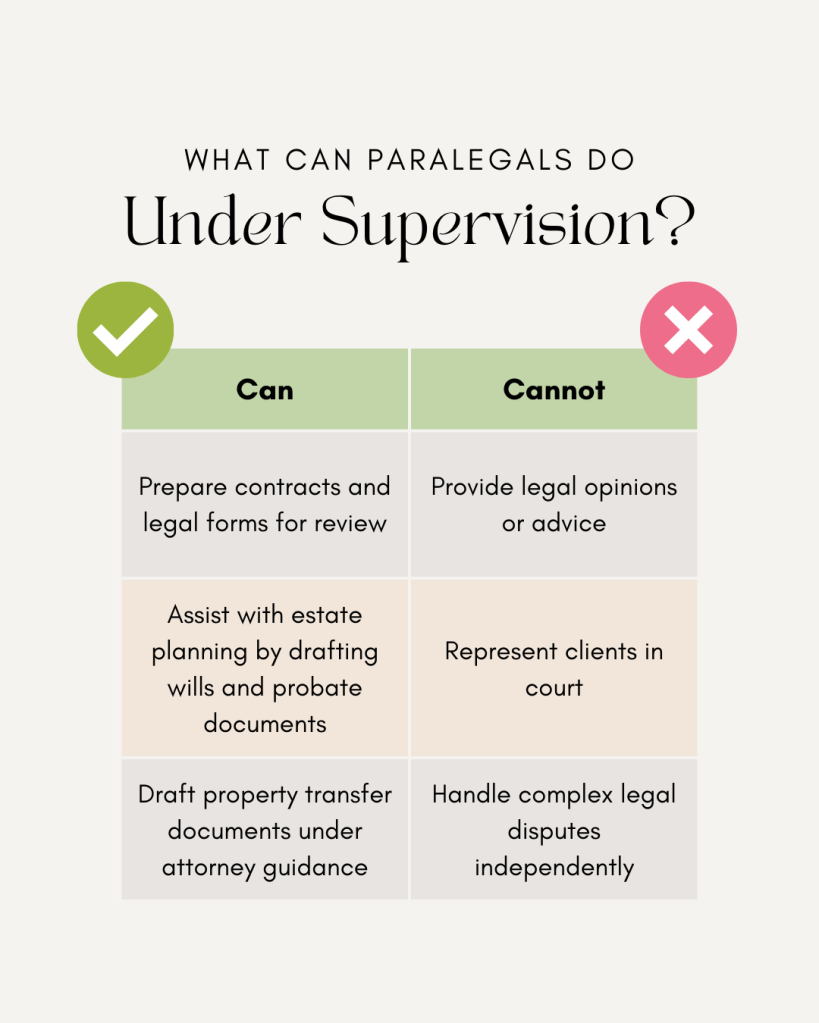
In practice, paralegals may operate in different ways. Some work directly within law firms under attorney supervision, while others work independently. Among independent paralegals, some operate without attorney oversight, whereas others ensure their work is reviewed by an attorney. The latter approach strikes a balance, offering the flexibility and affordability of independent paralegal services while maintaining legal integrity.
How TruGuide Ensures Compliance & Affordability
At TruGuide Consulting Services, we recognise the importance of legal oversight. Our paralegal work is reviewed by an attorney to ensure compliance with Jamaican laws and legal best practices. This approach allows clients to access affordable legal support without the risk of improper documentation or incorrect legal filings. By working within a structured, attorney-supervised framework, we provide clients with confidence in the quality and reliability of our services.
Final Thoughts
Accessing legal support should not be an overwhelming or expensive process. With proper supervision, paralegals provide a bridge between unaffordable legal fees and access to necessary legal support. At TruGuide Consulting Services, we ensure that clients receive high-quality assistance at a fraction of the cost of hiring an attorney. If you’re looking for affordable legal help that maintains high professional standards, consider working with TruGuide Consulting Services today.
 TruGuide Consulting Services
Leave a comment